
Aligners for teenagers · Berlin-Mitte

Invisalign Teen: Aligners for Teenagers

Transparent aligners can correct many dental misalignments in the teenage years – but only if they're worn. What the treatment can achieve, where its limits lie, and what it means for your family.

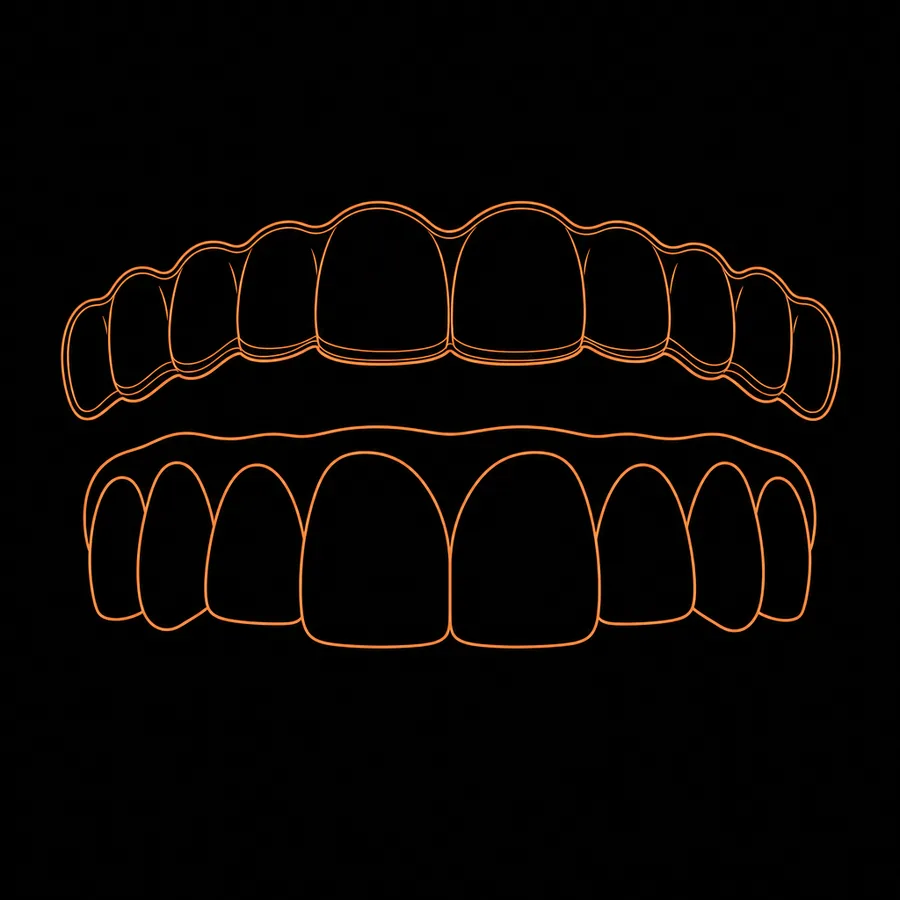
Close-up of a transparent aligner tray on a dark background
The aligner only works while it's on the teeth – about 22 hours a day.
Aligners
Transparent and
removable
Wear time
About 22 hours
per day
Teen feature
Indicator shows
wear time
Afterward
Retainer secures
the result

Starting point

Crooked teeth at thirteen are not a failure

Dental misalignments are among the most common findings in adolescence. Some are only bothersome in photos, others interfere with bite, speech, or daily dental care. Whether and when treatment makes sense isn't decided by the school photo, but by the clinical findings – and the conversation with you and your child.

Invisalign Teen is an aligner system from manufacturer Align Technology: a series of transparent, removable aligners that move teeth in small steps. For teenagers, the system has its own features, such as wear indicators and placeholders for teeth still coming in. It's not automatic: the aligner only works when it's in the mouth – not in a pocket.

Guidance

Is aligner treatment right for your child?

Whether aligners, fixed braces, or a thorough assessment first is the right next step depends on the transition to permanent teeth, the misalignment, and everyday life. These three questions offer an initial sense of direction for the consultation.

Question 1 of 3
  1. How far along is the transition to permanent teeth?

  2. How realistic is wearing it for about 22 hours a day?

  3. What's the main concern?

Aligner treatment belongs in the conversation

A largely completed transition to permanent teeth and the willingness to wear the aligners consistently are good preconditions. Whether the specific misalignment can be corrected with aligners only becomes clear through examination and digital planning. Even then, the result stays tied to daily wear time.

In the consultation, we clarify together with your child what the treatment means for everyday life – before the decision, not after.

A fixed appliance may be the more reliable choice

If daily wear is uncertain, or complex tooth and jaw movements are needed, fixed braces work independently of cooperation. That's not an inferior treatment – often it's simply the better fit. Combinations and switching methods later are also possible.

We discuss openly which appliance fits the findings – including what each option asks of everyday life.

Clarify findings and classification first

The transition to permanent teeth, jaw development, and the severity of the misalignment determine whether, when, and with what treatment should happen at all. Before choosing a method comes the assessment – examination and, if needed, an X-ray. The classification for statutory health insurance also belongs at this starting point.

Only after that can we honestly say which paths are worth considering – and whether waiting is, for now, the better recommendation.

These questions don't replace an examination, a diagnosis, or a consultation. They only offer an initial sense of direction for the conversation. Whether aligner treatment suits your child follows from the clinical findings and planning.

Comparison

Aligners or fixed braces: an honest comparison

Both methods can correct dental misalignments. They differ less in the goal than in the path there – and in what they ask of your child.

No method is categorically better. The choice follows the findings and everyday life.
Aspect Aligner trays Fixed braces
Visibility Transparent and not very noticeable; small attachments bonded to the teeth may be visible. Brackets and wires are visible, even in tooth-colored versions.
Eating and brushing The aligner is removed; eating and brushing continue as usual. Some foods are best avoided; brushing around the brackets takes more effort.
Cooperation The effect depends on about 22 hours of wear a day – every day. Works continuously, independent of cooperation.
Tooth movement Predictable for many types of movement; limited with pronounced bite and root corrections. Proven even for complex misalignments and bite positions.
Incidents A lost aligner must be reported and replaced. A loose bracket needs a repair appointment.

How thorough dental cleaning supports the time spent with an aligner or braces is covered on our Signature Prophylaxis page.

Process

From the first scan to the retainer

Aligner treatment is a planned path over many months. These steps are part of it – and none of them can be skipped.

  1. Consultation and findings

    We examine the teeth, gums, and bite, assess the transition to permanent teeth, and discuss whether treatment is medically indicated or primarily a cosmetic wish. This also includes the severity classification that statutory health insurance goes by.

  2. Scanning instead of impressions

    An intraoral scanner captures both jaws digitally – no impression material, no gag reflex. On screen, the plan for tooth movement takes shape, which we go through with you and your child. The simulation shows the treatment goal; it's a planning tool, not a guarantee.

  3. Wearing and changing aligners

    Your child wears each aligner around the clock and switches to the next one on a set schedule, usually every one to two weeks. Small tooth-colored attachments on individual teeth help the aligners carry out the planned movements.

    It's only removed for eating, drinking anything other than water, and brushing.
  4. Check-ups at the practice

    At regular intervals, we check whether the teeth are following the plan. If the progress deviates, we replan – additional refinement aligners at the end of treatment are common and not a sign that something went wrong.

  5. Securing the result: retention

    After the last aligner, teeth tend to drift back toward their old position. A retainer – a thin wire behind the front teeth or a night-time splint – is therefore a fixed part of the treatment plan, not an extra.

Everyday life

What Invisalign Teen asks of everyday life

School, sports, a musical instrument, the cafeteria: the aligner has to fit into this everyday life – and it sets some rules. The most important one: with the aligner in, only water is allowed as a drink. Otherwise, sugary or acidic drinks collect under the plastic and act on the tooth enamel undisturbed.

The blue dot is a clue, not a measuring device

Invisalign Teen has a small blue indicator that gradually fades while worn in the mouth. It gives you, your child, and the practice a rough sense of whether wear time is roughly on track. However, laboratory studies show that the fading also depends on temperature and environment – the dot is not an exact measurement.

More important than any check, then, is that wear time is understood as a shared project – not as surveillance.

Schematic illustration: a transparent aligner tray hovering over a row of front teeth, just before being placed
The aligner fully encloses the teeth and transmits small, planned movements – but only for as long as it's in place.

Losing one isn't a drama – not telling us is

Aligners get lost in the cafeteria and the gym – that's factored in. What matters is reporting it quickly: depending on where treatment stands, the previous or the next aligner is worn until a replacement arrives. How replacements are handled is settled before treatment begins.

Teeth still coming in are accounted for

Many teenagers don't yet have all their molars fully in place. Invisalign Teen can build placeholders into the aligners so erupting teeth can find their way. Whether that's enough in an individual case is part of the planning.

Limitations

What needs to be in place – and where aligners reach their limits

Aligners are a tool, not a miracle cure. For the treatment to be planned sensibly, these conditions should be in place:

  • a largely completed eruption of the permanent teeth
  • a misalignment that can be corrected with aligners to the extent planned
  • a realistic willingness to wear them about 22 hours a day
  • healthy teeth and healthy gums – cavities and inflammation are treated first
  • careful oral hygiene, including with the aligner in
  • willingness to attend regular check-ups and to wear the retainer afterward

Where fixed appliances keep the advantage

Pronounced jaw-position discrepancies, strong rotations of individual teeth, and movements that require deliberately uprighting a tooth root are harder to control with aligners. In such cases, a fixed appliance, a combination of both methods, or two-phase treatment can be the more honest recommendation. We tell you this before the decision – not after the aligners are already paid for.

The right timing is part of the diagnosis

Adolescence offers a favorable window, because the dental arches and jaw are still developing. But favorable doesn't mean arbitrary: for some findings, earlier intervention with other appliances makes sense; for others, it's worth waiting for the transition to permanent teeth. "Not treating at all right now" is also a possible outcome of good counseling.

Costs

Invisalign Teen costs: the factors that shape the plan

Reliable cost estimates are only possible after the findings and planning are complete. Before treatment begins, you'll receive a written treatment and cost plan – and you can know the factors that shape it beforehand.

These points need to be answered in the plan

Extent of the misalignment
How many teeth need to move, and how far – this determines the number of aligners and the length of treatment.
Severity classification
Which orthodontic indication group (KIG) the findings are classified under, and what that means for insurance coverage.
Diagnostics and planning
Are the examination, imaging, digital scan, and treatment planning fully itemized?
Additional elements
Are bonded attachments, elastics, or supplementary appliances included, if the plan calls for them?
Refinement phases
Are additional aligner series at the end of treatment included, or billed separately?
Replacement aligners
How are lost or damaged aligners handled?
Retention
Are retainers and check-ups after active treatment part of the plan, or a separate line item?

What statutory health insurance takes into account

For children and teenagers, statutory health insurance contributes to orthodontic treatment when the findings reach a sufficient severity grade. Even when approved, aligners are often not part of standard coverage; any additional costs are agreed in writing beforehand. Private insurers and supplementary policies pay according to their contract terms – submit the complete plan for written review before treatment begins.

Evidence

What the research shows – and what it doesn't

Aligners are well studied, but not a sure thing. The honest state of the evidence: effective for many misalignments, with documented limits – and a result that depends on wear time.

A systematic review of eight comparative studies concluded that both aligners and fixed braces treat misalignments effectively. Aligners shortened treatment duration on average; fixed appliances performed better at establishing adequate bite contacts, controlling root angulation, and post-treatment stability.

Ke et al., systematische Übersicht 2019 – PubMed 30674307. Nur zwei der acht eingeschlossenen Studien waren randomisiert, und die Übersicht ist nicht auf Jugendliche beschränkt. Sie beschreibt Gruppenergebnisse, keine Vorhersage für den Einzelfall – welche Bewegungen bei Ihrem Kind anstehen und womit sie erreichbar sind, zeigt erst die Planung.

Questions

Frequently asked questions about Invisalign Teen

From what age is Invisalign Teen possible?

There's no fixed age limit. What matters is dental status: the permanent teeth should have largely come in, and wearing the aligner has to realistically fit into everyday life. For younger children and earlier treatment phases, other approaches exist – the examination clarifies what makes sense and when.

Can the aligners be seen at school?

The aligners are transparent and not very noticeable from a distance, but not invisible. Small tooth-colored attachments on individual teeth may be visible, and speech may change slightly and temporarily in the first few days.

Does the treatment hurt?

A feeling of pressure or tightness in the first few days of a new aligner is common – it shows that something is moving. How strongly this is felt varies from person to person. Persistent pain or pressure sores, on the other hand, should be seen at the practice.

What happens if an aligner gets lost?

Please report it quickly rather than waiting it out. Depending on where treatment stands, your child temporarily wears the previous or the next aligner until a replacement arrives. How replacement aligners are handled and billed is settled before treatment begins.

What can my child eat and drink with the aligner in?

With the aligner in: only water. For eating and any other drinks, the aligner is taken out; before putting it back in, the teeth are brushed or at least rinsed thoroughly. Sugary drinks under the aligner are the most common avoidable cause of new cavities during treatment.

How does the blue check dot work?

The indicator gradually fades while the aligner is worn in the mouth. It gives a rough sense of whether wear time is roughly on track – it's not an exact measuring device, since fading also depends on temperature and environment. We go over it together at every check-up, without turning it into an interrogation.

Does statutory health insurance pay for the treatment?

That depends on the severity grade: statutory health insurance contributes for children and teenagers when the classification of the findings shows treatment is necessary. Aligners are often not part of standard coverage, so additional costs can arise. What applies in your case is set out in the written plan, which you receive before treatment starts and can have reviewed.

How long does the treatment take?

This can only be narrowed down honestly after the findings and planning are complete. The extent of the misalignment, the number of aligners, and actual wear time determine the duration – with consistent wear, anywhere from a few months to well over a year. Additional refinement aligners at the end are common and planned for.

What happens after the last aligner?

Retention: after every movement, teeth tend to drift back toward their old position. A thin wire behind the front teeth or a night-time splint holds the result in place. Skipping retention risks the entire treatment – which is why it's part of the plan from the start.

Understand first, decide after

Bring your child along – it's their teeth and their everyday life. Together, we'll clarify whether aligner treatment is a fit, what alternatives exist, and what the written plan needs to include. The decision comes afterward, without pressure.

Or call: 030 436665501