Dentistry
Function and tooth protection
Assesses pain, movement, the joint and bite, and plans reversible dental measures.
Functional diagnostics · Berlin-Mitte
You may already have visited several practices because of jaw, head or ear symptoms. We do not promise a single cause; instead, we assess systematically whether a functional disorder of the masticatory system is present and, if so, which one.
Signs
Craniomandibular dysfunction, or CMD, is an umbrella term for pain and functional disorders of the masticatory muscles and jaw joints. It is not a single diagnosis with one cause. Bite, muscles, joints, sleep, strain and pain processing can contribute to different degrees.
This explains why some people have already been through a long series of dental, ENT, orthopedic or neurological consultations. That process was not in vain: jaw, head, ear and neck symptoms have several possible causes. Our part is to determine whether there is a functional dental assessment.
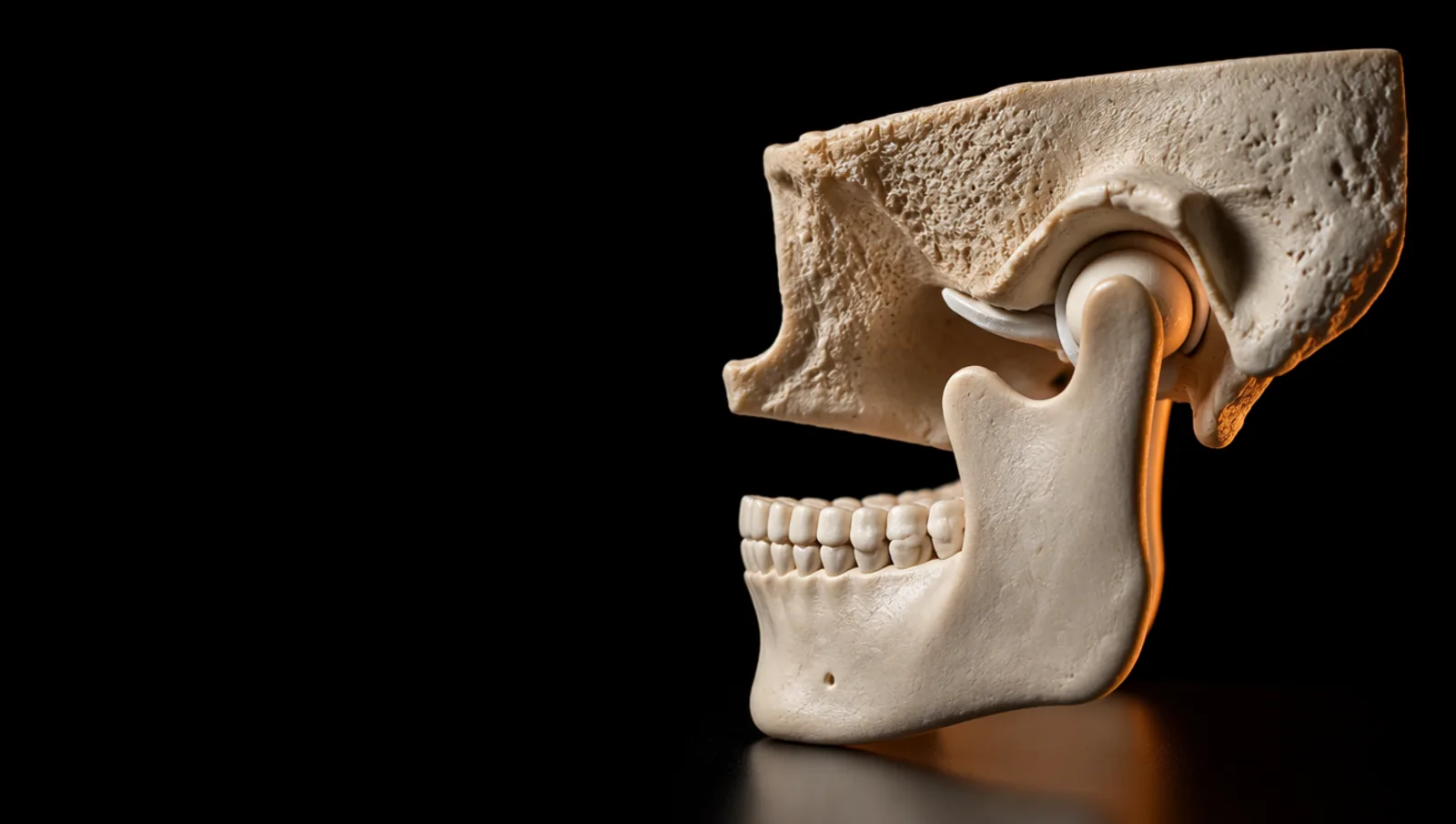
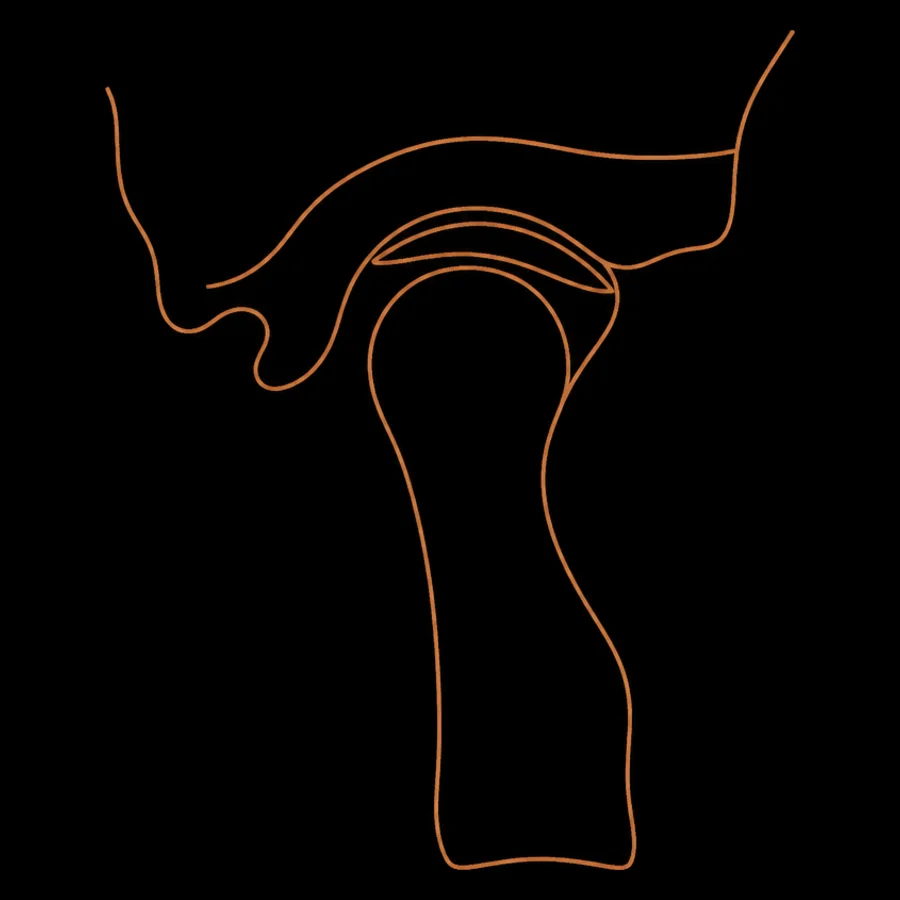
An articular disc lies between the mandibular condyle and the skull. The masticatory muscles guide the lower jaw. Pain can originate in the muscle, joint or surrounding structures; a sound does not automatically reveal which structure is involved.
That is why we assess movement and pain together. Painless clicking of the jaw joint without loss of function generally does not require treatment.
Tinnitus, migraine and dizziness can occur at the same time as jaw symptoms. This does not establish a proven causal relationship. An ENT or neurological assessment remains important.
Guidance
Pain, mobility and progression determine how the first consultation begins. These three questions distinguish between a prompt assessment, a functional analysis that can be scheduled and a sound without current symptoms.
What are you noticing at the moment?
How has the situation developed?
What do you need as the next step?
Pain or restricted mouth opening should be examined clinically without delay. We first assess mobility, pain and function. This does not yet constitute a CMD diagnosis; other dental or specialist causes may also be relevant.
At the appointment, please describe the onset, progression and triggers, as well as previous assessments and medications.
Recurring symptoms under strain, clenching or grinding are assessed through a medical history and clinical functional assessment. Reversible measures come first. Depending on the assessment, information, exercises, physiotherapy or an individually monitored splint may be discussed.
Further measurements or imaging follow only if they answer a specific question.
A consistent joint sound without pain or restriction generally does not require treatment. The sound alone is not a diagnosis. Note whether pain, locking or a change in mouth opening develops.
If such a change occurs, or if you are uncertain, arrange an examination.
These questions do not replace an examination, diagnosis or consultation. They only indicate where the first appointment may begin. The assessment determines what evaluation is necessary in your case.
Diagnostics
Not everyone needs the same series of tests and devices. The examination proceeds in stages. Another stage is added only if it answers a specific question and could change the decision.
We record symptoms, their progression over time, previous treatments, medications, sleep, clenching or grinding, and strains in daily life. Previous assessments from other specialties are also included.
At F80, we assess the jaw joints, masticatory muscles, mouth opening, lower-jaw movements and bite. We palpate typical pain points and compare whether familiar symptoms can be reproduced in a targeted way.
Specific loading and movement tests can help identify the muscular and joint structures involved more precisely. They supplement the medical history but do not replace it.
Models, transfer to an articulator or recording lower-jaw movements may be relevant for a splint or subsequent dental treatment. A measurement alone does not prove the cause of pain.
At F80, digital X-rays and a 3D scan of the teeth can supplement the assessment. Further imaging is reserved for a specific question about the joint, soft tissue or bone—it is not part of routine testing for everyone.
Treatment
Treatment is based on the assessment. The aim may be less pain, better mobility, protection of the teeth or a more reliable way of managing recurring symptoms. Complete freedom from symptoms cannot be promised.
You learn to recognize strain: “lips together, teeth apart,” reducing chewing gum, and temporarily using softer foods and warmth during acute overloading. Movement and relaxation exercises tailored to the assessment are added.
If a splint is indicated, it is custom-made in the laboratory at F80, fitted and fine-tuned at follow-up appointments. It can protect the teeth and relieve symptoms, but it does not automatically cure bruxism. The guidelines consider the evidence limited compared with information, exercises and relaxation.
Where supported by the assessment, physiotherapy may be prescribed and coordinated with dental treatment. For chronic pain or ear, head, neck or sleep symptoms, other specialties are involved as needed.
Adjusting tooth contacts by grinding or providing new dental restorations are not first-line treatments for unclear CMD symptoms. Interfering contacts or damaged teeth are treated only when there is a separate dental indication and a consistent assessment.
Botulinum toxin: Its use for bruxism is off-label, meaning outside the approved indication. It is not a standard treatment for CMD and is not presented here as a quick solution.
Collaboration
Interdisciplinary care does not mean treating everything at the same time. It means referring an open question to the appropriate specialty.
Dentistry
Assesses pain, movement, the joint and bite, and plans reversible dental measures.
Physiotherapy
Works on the masticatory and neck muscles, mobility and a suitable exercise program.
ENT
Assesses ear pain, tinnitus, changes in hearing and other causes involving the ear, nose and throat.
Neurology · Orthopaedics
Assesses neurological causes, types of headache, dizziness and assessments involving the cervical spine.
Pain medicine
Helps with pain becoming chronic, sleep, anxiety and pain management without treating the symptoms as purely psychological.
Sleep medicine
Investigates relevant sleep disorders and possible suspected sleep apnea.
Kasse (German statutory health insurance fund)
The dental examination and certain occlusal appliances may be a Kassenleistung (benefit covered by German statutory health insurance) when clinically indicated. Whether a particular splint qualifies depends on the specific assessment and intended design.
Functional analysis and functional therapy measures are generally Privatleistungen (self-paid private services). Before any privately paid diagnostic test or additional service, you receive a clear explanation and written cost information.
“CMD is always a Kassenleistung (benefit covered by German statutory health insurance)” is as inaccurate as “CMD is entirely private.” What matters is the individual service.
Context
In the NAKO Health Study of 20,603 adults who underwent dental examinations, 10.1 percent reported jaw or facial pain in the previous 30 days. The weighted prevalence of clinically defined painful TMD was 3.7 percent.
Herpel et al., Deutsches Ärzteblatt, 2026 – NAKO analysis as a PDF. The figures describe painful functional disorders in a study group. They permit neither self-diagnosis nor conclusions about the cause, need for treatment or course in an individual case.
Broad advertising claims often conflate painless sounds, isolated examination signs and pain that requires treatment. For your decision, what matters is not a percentage but a reproducible assessment.
Questions
Generally not, as long as movement remains unrestricted and no pain develops. New locking, restricted mouth opening or painful sounds should be examined.
The process begins with a medical history and clinical functional analysis. The jaw joints, masticatory muscles, movement and bite are assessed. Manual, instrumental or imaging procedures follow only if they answer an open question.
No. Jaw symptoms and tinnitus can occur together, but this does not prove a definite causal relationship. An ENT assessment remains important.
Depending on the diagnosis, a splint can protect the teeth and relieve muscle or joint symptoms. It does not automatically cure bruxism, and evidence of benefits over information and exercises is limited. Follow-up appointments are therefore part of the approach.
No. Imaging is appropriate when there is a specific question about the joint, soft tissue, bone or teeth and the result would change treatment. It is not routine screening for everyone.
No. Its use for bruxism would be off-label. It is not a standard treatment for CMD; reversible measures and possible alternatives are assessed first.
The examination and certain occlusal appliances may be a Kassenleistung (benefit covered by German statutory health insurance). Functional analysis generally has to be paid for privately. Before additional services, we explain the classification in writing.
Yes, if supported by the assessment. With an appropriate diagnosis, physiotherapy may be prescribed and coordinated with dental treatment. Exercises and manual therapy are based on mobility and the pain assessment.
Depending on the assessment, this can range from a few weeks to several months. With chronic pain, monitoring progress is more important than a fixed timeframe. The splint and exercises are adjusted, reduced or discontinued when progress allows.
Bring any existing assessments and your questions. We assess what can be explained dentally, which diagnostic tests are necessary and when another specialty may help.
Or call: 030 436665501