Ceramic may be suitable
When the light material color is relevant with thin soft tissue, a metal-free implant body is desired, and the bone, bite, and implant position are compatible with the available system.
Implant dentistry · Material selection
The zirconia implant body is metal-free. Whether ceramic or titanium is better suited to your restoration depends on the clinical findings – not on ideology.
Decision
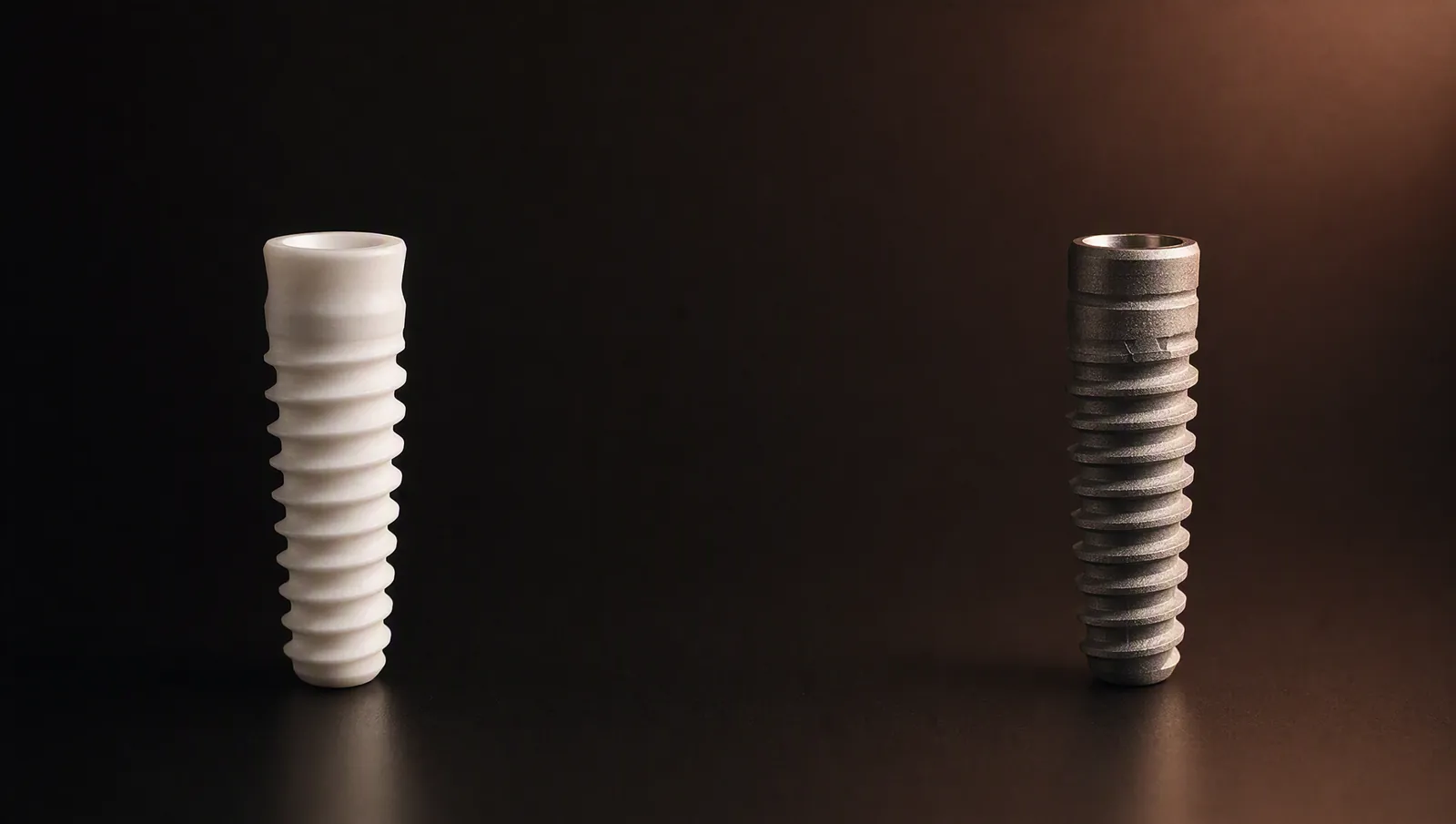
The implant body of a ceramic implant anchored in the bone is made of zirconia. The material is light-colored and metal-free, and may be of aesthetic interest, particularly when the gums are thin. This does not automatically make it healthier or more suitable for every jaw.
Titanium has the broader body of long-term evidence. Zirconia shows comparable results in short- to medium-term studies, but robust long-term data are still lacking. This uncertainty is precisely what should be discussed during consultation.
The material decision follows examination and planning. We explain the general process, healing, and possible bone procedures on our page about dental implants in Berlin-Mitte rather than repeating it here.
When the light material color is relevant with thin soft tissue, a metal-free implant body is desired, and the bone, bite, and implant position are compatible with the available system.
When maximum prosthetic flexibility, a particularly wide choice of components, or the material base with the longest documentation is decisive for planning.
Guidance
Your material preference, implant position, and restorative system must be compatible. These three questions indicate which material property is likely to be central to the discussion and what needs to be clarified beforehand.
What is particularly important to you when choosing the material?
What type of restoration is likely to be planned?
What should be clarified before the decision?
A zirconia implant body may be of interest if a metal-free option is desired or in an aesthetically demanding position. The light material color is a specific advantage of ceramic. The bone, bite, and available system must be suitable.
If a completely metal-free restoration is important, we also specify the abutment, connection, crown, and other components in the plan.
If long-term evidence, component variety, and prosthetic flexibility are particularly important, there are good reasons to consider titanium. Titanium offers the more extensively documented material base. Here too, the specific plan depends on position, bone, soft tissue, and load.
When the gums are thin, we discuss whether the implant position, abutment, and crown design affect possible dark show-through.
Unexplained symptoms, an implant position that has not yet been determined, or a suspected intolerance cannot be resolved by the name of a material. The specific clinical question is clarified first. This includes tissue, bone, bite, existing components, and medical history.
Only then can we assess whether ceramic or titanium offers the relevant advantage for the planned restoration.
These questions do not replace an examination, diagnosis, or consultation. They only organize the material-related topics for discussion. Whether ceramic or titanium is suitable in your case depends on the clinical findings and planning.
Comparison
Both materials can heal in the bone in suitable cases. The main differences lie in the breadth of the data, the color, and the design options of the respective system.
Decades of clinical use and a broad base of long-term data. Risks nevertheless depend on the clinical findings, surgery, load, care, and follow-up.
The material is gray. With very thin gums, dark show-through may be relevant; tissue thickness and crown design also affect the result.
Usually two-piece: the implant body and abutment are separate. This provides flexibility for the prosthetic axis and a wide choice of components.
Titanium is a metal. If there is a substantiated suspicion of a rare implant-related intolerance reaction, assessment in accordance with clinical guidelines is required.
Comparable results are possible in the short to medium term. The studies are smaller and less consistent; robust long-term data do not yet match those available for titanium.
The light color may be advantageous when the gums are thin. However, it is no substitute for careful positioning or sufficiently stable soft tissue.
One-piece and two-piece solutions are available. The available abutments, connections, and crowns depend more heavily on the system selected.
An unfavorable axis in one-piece implants can hardly be corrected later. Not every position, immediate restoration, or complex bridge design is compatible with every ceramic system.
No material prevents biofilm, inflammation, or overload. Care and follow-up remain necessary with both titanium and ceramic.
Systems
In a one-piece ceramic implant, the implant body and abutment form a single unit. This requires very precise surgical positioning because the axis can hardly be corrected later.
In a two-piece system, the implant body and abutment are connected. This provides prosthetic flexibility but adds further components and a connection point to the plan.
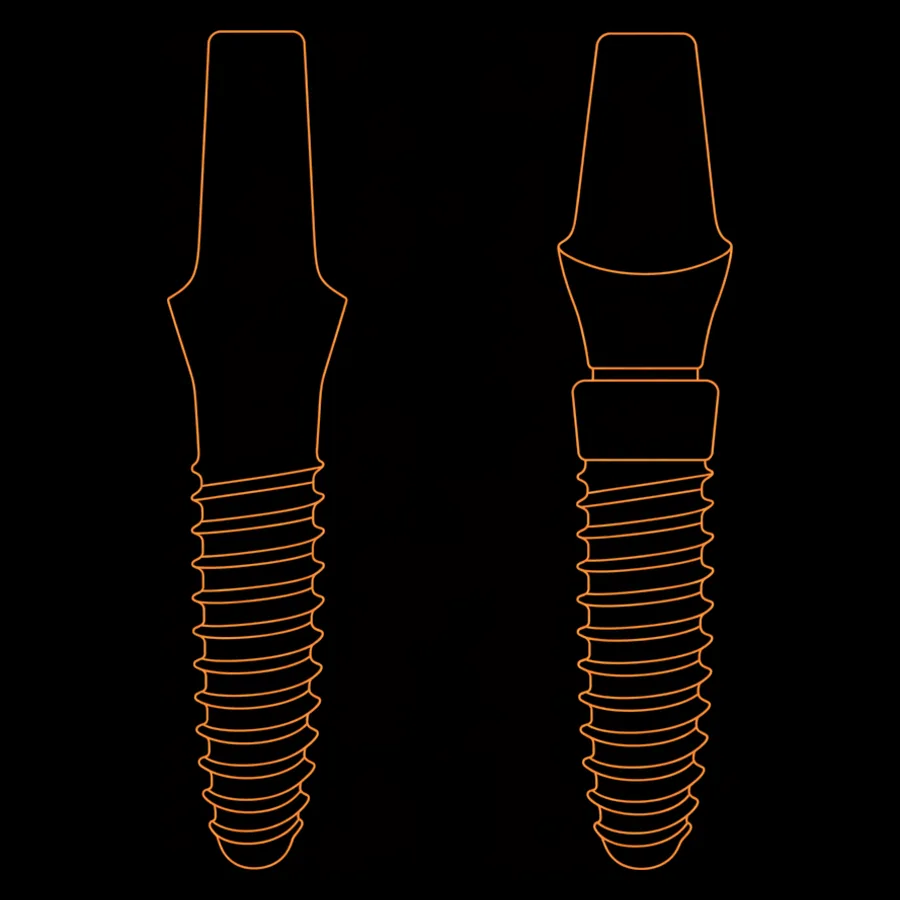
In a ceramic implant, the body seated in the bone is made of zirconia. Whether the complete restoration is metal-free also depends on the abutment, screw or connection, crown, temporary restoration, and dental laboratory components. Anyone who wants a completely metal-free restoration should have every component specified in the Heil- und Kostenplan (the written treatment and cost plan required before treatment).
Intolerance
A skin contact allergy, a suspected “titanium allergy,” and a local implant-related intolerance reaction are not the same. The German S3 guideline describes rare reactions associated with titanium particles that are difficult to diagnose. It does not recommend generally avoiding titanium.
Symptoms around an implant are examined clinically. More common causes such as biofilm, inflammation, overload, a loose connection, or a prosthetic problem must be assessed. Ceramic may be a material option when there is a substantiated suspicion; it is not a diagnosis.
Online self-tests or isolated laboratory values without clinical findings do not determine material selection. Please bring any existing reports with you. We take your observations seriously and assess them medically.
Onset and type of symptoms, condition of the gums and bone, bite, implant position, connection components, oral hygiene, and relevant medical history.
A general list of symptoms, an online questionnaire, or the claim that titanium is inherently incompatible with the body. Material selection requires clinical findings, a risk assessment, and a suitable prosthetic concept.
Source: S3 guideline on titanium hypersensitivity in dental implants.
Costs
The implant body alone is not a complete dental restoration. A ceramic restoration may be more involved because of the implant system, surgical positioning, available prosthetic components, and laboratory work. Only the complete restoration, from clinical findings to the finished crown, can be compared.
After examination and planning, you will receive a complete Heil- und Kostenplan (the written treatment and cost plan required before treatment). The gesetzliche Krankenversicherung (German statutory health insurance) subsidizes dental prostheses based on the clinical findings; the implant procedure itself is generally not part of the Regelversorgung (the standard care defined under German statutory health insurance). Private insurers and supplemental insurers assess coverage according to the policy. Submit the plan before treatment begins.
Evidence
A 2023 meta-analysis found similar survival rates in two randomized studies involving 100 zirconia implants and 99 titanium implants with 12 to 80 months of follow-up. Robust randomized long-term data were lacking.
Padhye et al., 2023 – PubMed 37740825. Two small studies and differing follow-up periods limit the conclusions. An average from a study is not a promise for an individual case; system, bone, position, loading, care and follow-up affect the prognosis.
The balanced summary is therefore: titanium has the broader body of long-term evidence. Ceramic shows comparable results in the short to medium term, but robust long-term data are still lacking. Describing both materials as equally well documented omits an important difference.
Questions
Not in general. Zirconia may be appropriate because of its light color and metal-free implant body. Titanium offers the broader body of long-term evidence and more prosthetic system options. The clinical findings determine which advantage matters in your situation.
The zirconia implant body is metal-free. Whether this applies to the complete restoration also depends on the abutment, connection or screw, crown, temporary restoration, and laboratory components. Have every component specified in writing.
A classic contact allergy and an implant-related reaction are not equivalent. The S3 guideline describes rare reactions that are diagnostically complex. Symptoms are assessed clinically without assuming that titanium is generally the cause.
No. A questionnaire or laboratory value without clinical findings can determine neither the cause of symptoms nor the suitable implant material. Existing results may form part of the medical history but do not replace examination and differential diagnosis.
In a one-piece system, the implant body and abutment form a single unit, so the position must be particularly precise. In a two-piece system, the abutment is connected later. This provides more prosthetic flexibility but involves additional components.
The material alone does not determine this. Primary stability, bone, soft tissue, bite, and the specific implant system must permit early loading. If one requirement is not met, the implant is initially allowed to heal while protected from load.
The light color may help avoid dark show-through. However, the result also depends on tissue thickness, implant position, abutment, and crown. The material alone cannot compensate for unfavorable initial conditions.
System selection, surgical positioning, prosthetic components, and laboratory work may require more planning. A comparison must therefore include diagnostics, surgery, abutment, crown, laboratory work, temporary restoration, and follow-up, not only the implant body.
We describe the process from clinical findings and planning through implant placement and healing to the crown on our page about dental implants in Berlin-Mitte. This page focuses on the material and cost structure.
We compare titanium and zirconia for your specific situation and also explain their limitations. You then receive a written plan for the complete restoration before making your decision.
Or call: 030 436665501