Breathing
Nasal breathing
Nasal breathing is the basis for closed lips and a tongue resting on the palate – but this interplay often has to be relearned first. Mouth breathing changes muscle tension, sleep quality and jaw growth.
Holistic and functional · Berlin-Mitte
Dentosophie is a holistic, functional therapeutic approach. It centres on nasal breathing, lip closure, resting tongue posture, chewing, swallowing and body posture – functions that run thousands of times a day and influence one another.
Method
Dentosophie does not look at the mouth in isolation, but as part of a functional system as a whole. Nasal breathing, tongue posture, swallowing and chewing influence one another and affect the development of the jaw, the musculature and the face.
The aim of treatment is to bring these natural functions back into balance and to support the body in its self-regulation. To that end we combine functional exercises with the Dentosophie Balancer and close ongoing support.
The approach was developed by the French dentist Michel Montaud. Today it is used by dentists who put function and a holistic view first – with children as much as with adults.
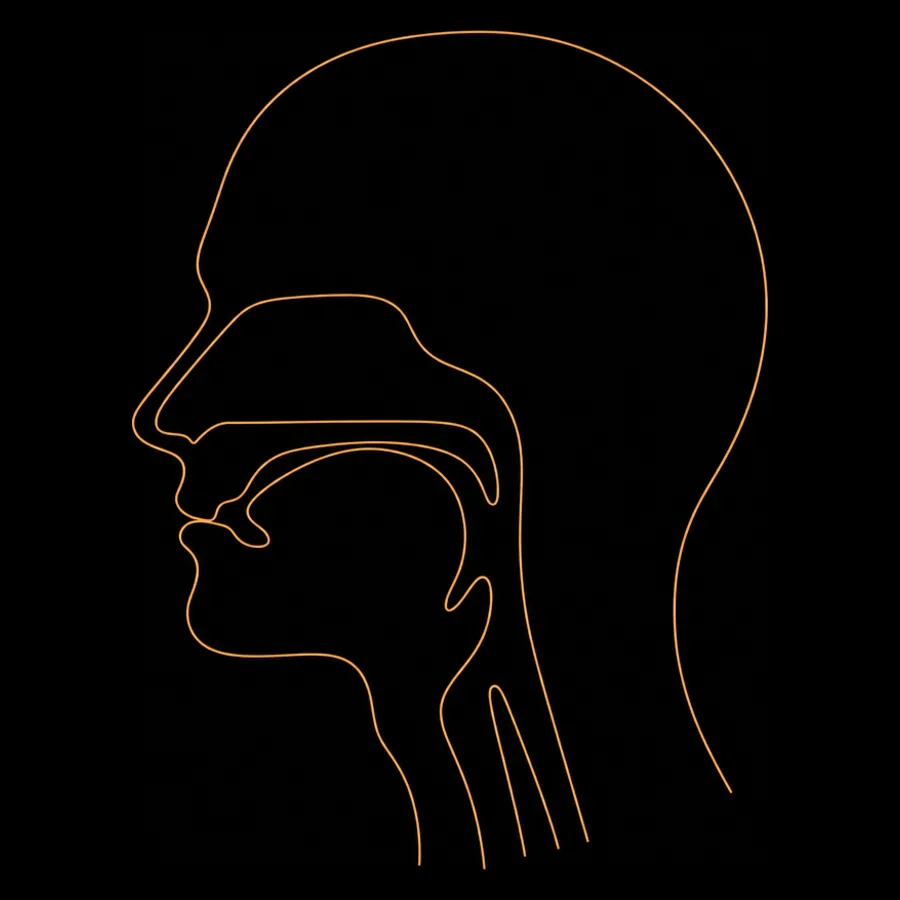
The nose filters, warms and humidifies the air. Nasal breathing creates the conditions for the lips to close without effort and the tongue to find the palate. Often, though, this does not happen by itself: many people breathe through the nose while the tongue still rests low. That is why breathing comes first in every Dentosophie assessment – and why the tongue posture is deliberately relearned.
The tongue works all day long – when speaking, chewing and swallowing. Where it rests and how you swallow help shape the jaw and the face over the years.
Functions
These processes happen automatically – which is precisely why they rarely stand out. In Dentosophie they are observed one by one and then viewed as a whole again.
Breathing
Nasal breathing is the basis for closed lips and a tongue resting on the palate – but this interplay often has to be relearned first. Mouth breathing changes muscle tension, sleep quality and jaw growth.
Lips
Relaxed, closed lips are the counterpart to the tongue. Only this balance between inside and outside gives the dental arches their shape.
Tongue
At rest the tongue belongs against the palate. If it lies low or presses against the teeth, that force acts over years – with every single swallow.
Chewing
Chewing firmly and on both sides trains the muscles and the temporomandibular joints and stimulates growth. One-sided habits and soft food do the opposite.
Swallowing
In physiological swallowing the tongue presses against the palate, not against the teeth. An altered swallowing pattern keeps a malocclusion going – even after braces.
Posture
Head posture, neck and jaw are connected through the musculature. That is why the assessment looks beyond the mouth – and sometimes involves physiotherapy or osteopathy.
Who it is for
What matters is not age, but how reliably the basic functions run. Children, adolescents and adults can all be supported with this approach.
Children
As long as the jaw and face are growing, every function plays its part. An open mouth, thumb sucking, snoring or an altered swallowing pattern can be addressed particularly well during this time.
Adults
Muscles keep learning throughout life. Even once growth is complete, breathing, tongue posture and swallowing patterns can be changed – the exercises simply take a little more patience.
TMD and grinding
With temporomandibular joint complaints, bruxism and tension in the head and neck, Dentosophie takes a functional route: it aims at relaxing the musculature and at a balanced interplay of breathing, tongue and jaw.
Sleep and breathing
Where mouth breathing, a low tongue position and snoring are connected, dentosophy works on these functions. We do not promise success with snoring. Diagnosed sleep apnea is coordinated with sleep medicine.
A freely patent nose is the foundation. If allergies or anatomical narrowings obstruct nasal breathing, we work together with ENT colleagues – in parallel with the functional treatment.
Guidance
Three questions give a first orientation as to where the approach would start with you and what should be discussed at the first appointment.
Who are you looking for support for?
What do you notice most in everyday life?
Which goal matters most to you?
As long as the jaw and face are growing, development works with you. What breathing, tongue and swallowing set up now helps shape the years ahead. That is why we begin with a functional assessment and instructions that are workable in family life.
At the first appointment we clarify which exercises make sense, whether a Balancer is part of it and how often we will check progress.
Muscles and movement patterns can learn. Breathing, tongue position and swallowing patterns can be practised at any age – including with grinding, tension or jaw joint problems.
We look at function and musculature and agree together on what we will work on and how you will notice the change.
Orthodontics, ENT, speech therapy, sleep medicine, physiotherapy and osteopathy each answer a question of their own. Dentosophie takes care of the function that continues alongside them.
We coordinate with everyone involved so that the functional work supports the ongoing treatment rather than cutting across it.
These questions give a first orientation and do not replace an examination. What makes sense in your case is shown by the assessment at the first appointment.
Treatment
Treatment is individual and rests on three building blocks. None of them carries on its own – only together do they make up the approach.
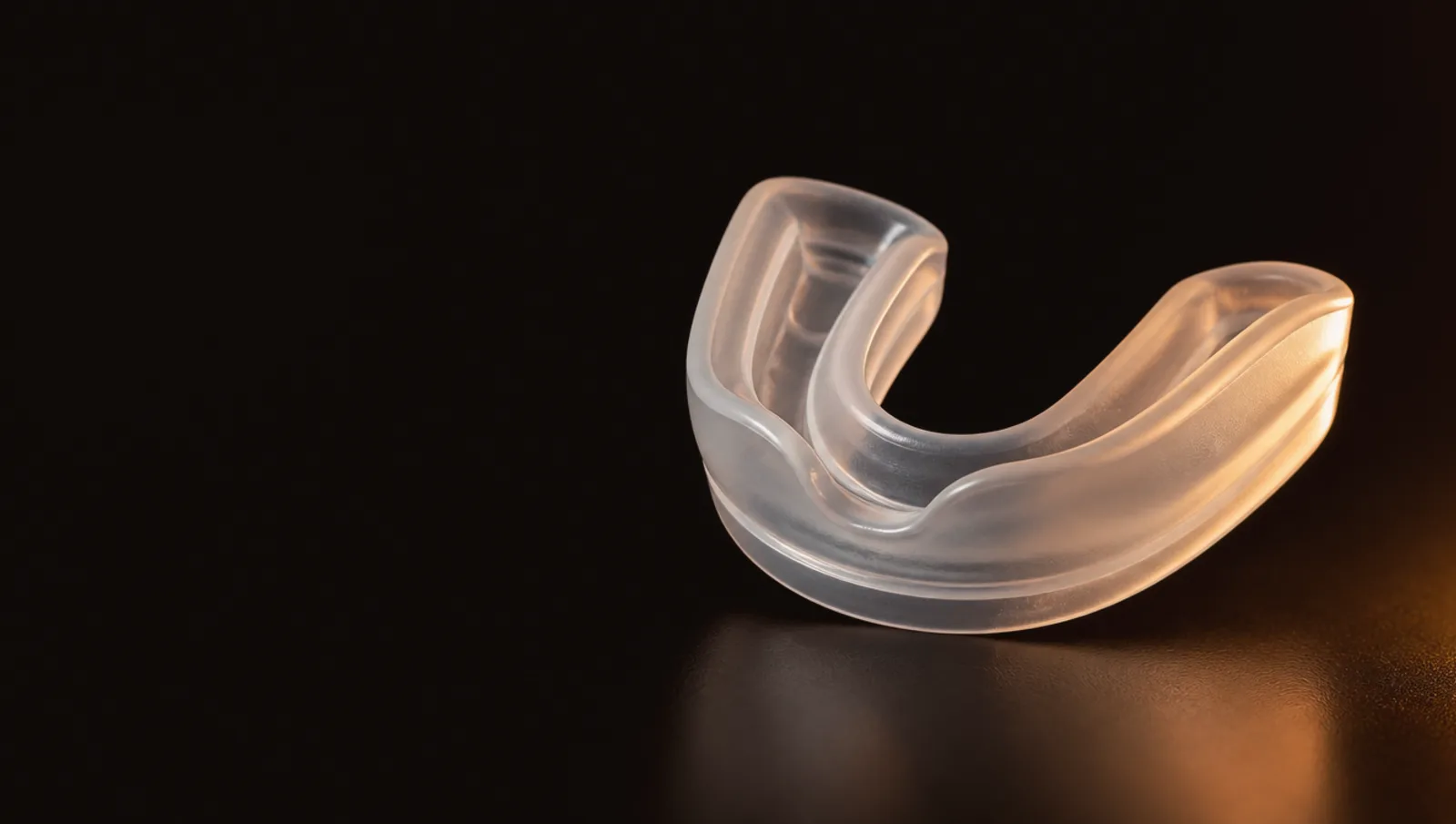
The Dentosophy Balancer is not a mechanical tooth correction device like a brace. It supports the functional exercises for breathing, tongue position, swallowing and chewing and helps the muscles relax.
It is usually worn in the evening and at night as well as for periods during the day. Size, fit and the wearing schedule are set together and adjusted as things progress.
The exercises target nasal breathing, lip closure, tongue posture and a physiological swallowing pattern. They need no device, are quickly learned and take only a few minutes.
You are shown how to do them here, repeat them at home and they are checked at every review. That way conscious movements gradually become automatic ones.
At regular appointments we look at breathing, lip closure, tongue posture, the swallowing pattern and the fit of the Balancer, correct the exercises and agree the next step.
The success of the treatment depends decisively on this individual support and on regular use.
Process
What the path looks like in detail follows from the assessment. These steps are part of it as a rule.
We listen: what stands out, since when, what has already been tried? Sleep, breathing, diet, habits and previous treatments are all part of this.
We look at nasal breathing, lip closure, resting tongue posture, the swallowing pattern, chewing behaviour, musculature and posture – as well as the teeth, tooth position and jaw development.
Together we determine which functions we will work on, how a change will become recognisable and who else from other disciplines may need to be involved.
The right Balancer is selected and fitted. You receive clear instructions on wearing times, cleaning and everyday use.
The exercises for breathing, lips, tongue and swallowing are taught and practised until they can be repeated reliably at home.
At regular appointments we check how things are progressing and adjust the exercises and the wearing schedule. Once the functions are stable, the intervals get longer.
Dentosophie is planned in months, not in weeks. Functions change through repetition in everyday life – how long it takes in an individual case depends on the initial assessment, age and cooperation. After the assessment this can be estimated realistically.
Dentosophie is a private service and not a standard benefit of German statutory health insurance. Before starting you receive an individual treatment and cost plan setting out the assessment, the Balancer and the review appointments planned.
At F80

Dentist
Dr Stefanie Schönmuth is a dentist for aesthetics and endodontics and looks after the holistic, functional treatments at F80. She studied at the Charité and then worked in Amsterdam for five years. She treats patients in German, English and Dutch.
Over the years she has developed a trained eye for aesthetics, function and how the two are connected – precisely the area where Dentosophie comes in.
Questions
A holistic, functional therapeutic approach. It views nasal breathing, lip closure, resting tongue posture, chewing, swallowing and body posture as one connected system and works with functional exercises, the Balancer and close ongoing support.
No. The Balancer is a soft, removable medical device. It does not correct teeth mechanically but supports the exercises for breathing, tongue position, swallowing and chewing. Whether orthodontic treatment would also be useful is something we discuss case by case.
Treatment can begin as soon as all the milk teeth are in place. In growing children development works with you, so an early start is favourable. Adolescents and adults can be treated just as well – the exercises simply take a little more patience.
With temporomandibular joint complaints, bruxism and tension, the functional approach is one of the routes we offer: it aims at relaxed musculature and a balanced interplay of breathing, tongue and jaw. Our page on TMD treatment covers how the findings are classified.
Mouth breathing, a low tongue position and snoring can be connected, and these functions are where dentosophy starts. We do not promise success with snoring. Diagnosed sleep apnea needs assessment by sleep medicine; we coordinate treatment with your sleep medicine specialist.
Then we clarify the cause together with ENT colleagues – allergies, enlarged adenoids or anatomical narrowings belong there. The functional work continues in parallel.
Quite a bit – and that is the heart of the method. A few minutes of exercises daily, wearing the Balancer regularly and keeping the review appointments. The success of the treatment depends decisively on individual support and on regular use.
Yes. Functional work and orthodontics do not rule each other out – quite the opposite: an altered swallowing pattern can encourage a malocclusion to return after braces. We coordinate with the practice providing the orthodontic treatment.
Usually several months, often longer. Functions change through daily repetition. After the assessment the likely timescale for your case can be estimated.
Dentosophie is a private service and not a standard benefit of German statutory health insurance. Before starting you receive an individual treatment and cost plan.
Arrange a first appointment at Friedrichstraße 80. We look at breathing, tongue, swallowing, chewing and posture and discuss what Dentosophie can do in your case.
Or call: 030 436665501