What you should expect
Chipping at margins and cusps, cracks in the material, failure of the adhesive bond, new decay at the restoration margin and temporary sensitivity to temperature during the first few weeks.
Digital dentistry · Berlin-Mitte
Ceramic inlay, partial crown or crown – scanned instead of conventionally impressed, designed on screen and milled at the practice. If the clinical findings allow, in a single appointment.
Method
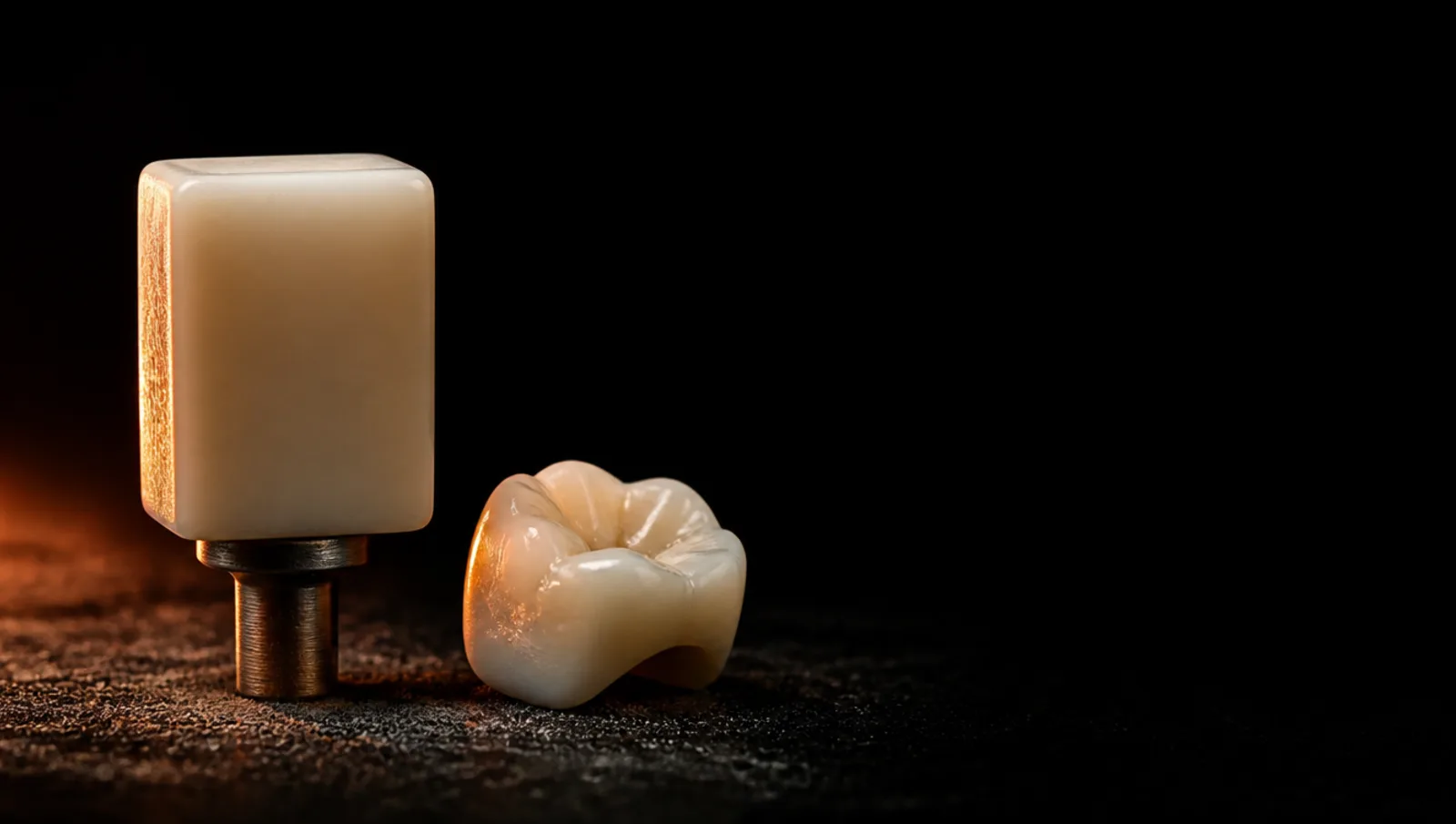
CEREC refers to computer-aided ceramic restorations produced at the dental practice itself – without involving an external laboratory. The method originated in a development at the University of Zurich in the 1980s and has since become one of the longest-documented digital methods in dentistry.
Important context: CEREC is a manufacturing method, not a treatment in itself. Whether your tooth needs an inlay, partial crown or crown is determined by the clinical findings – not the device. The technology changes only how and where the restoration is made: from an optical scan instead of an impression, and from a ceramic block at the practice instead of a delivery ten days later.
CEREC therefore replaces neither an implant nor a long-span bridge. It is the fast route to one restoration on one tooth – and that is precisely where its strength lies.
For you, the noticeable difference lies less in the result than in the route to it. A conventional laboratory-made inlay requires two appointments – and several things happen between them that are eliminated when the restoration is made at the practice:
Suitability
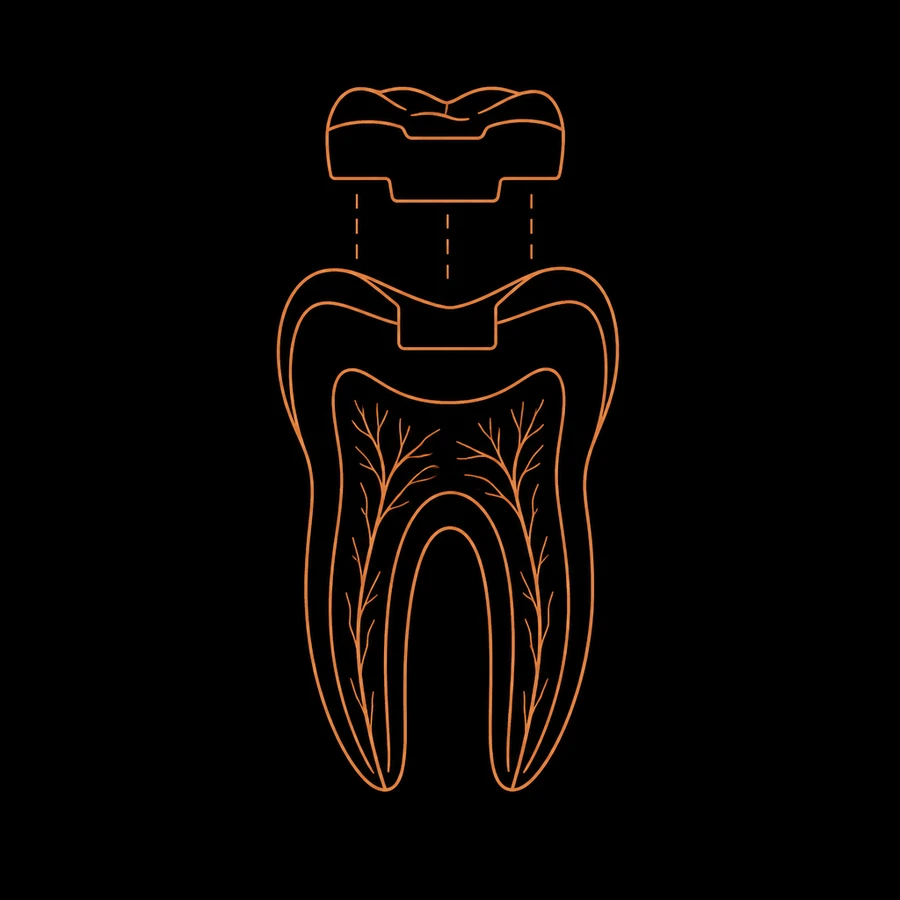
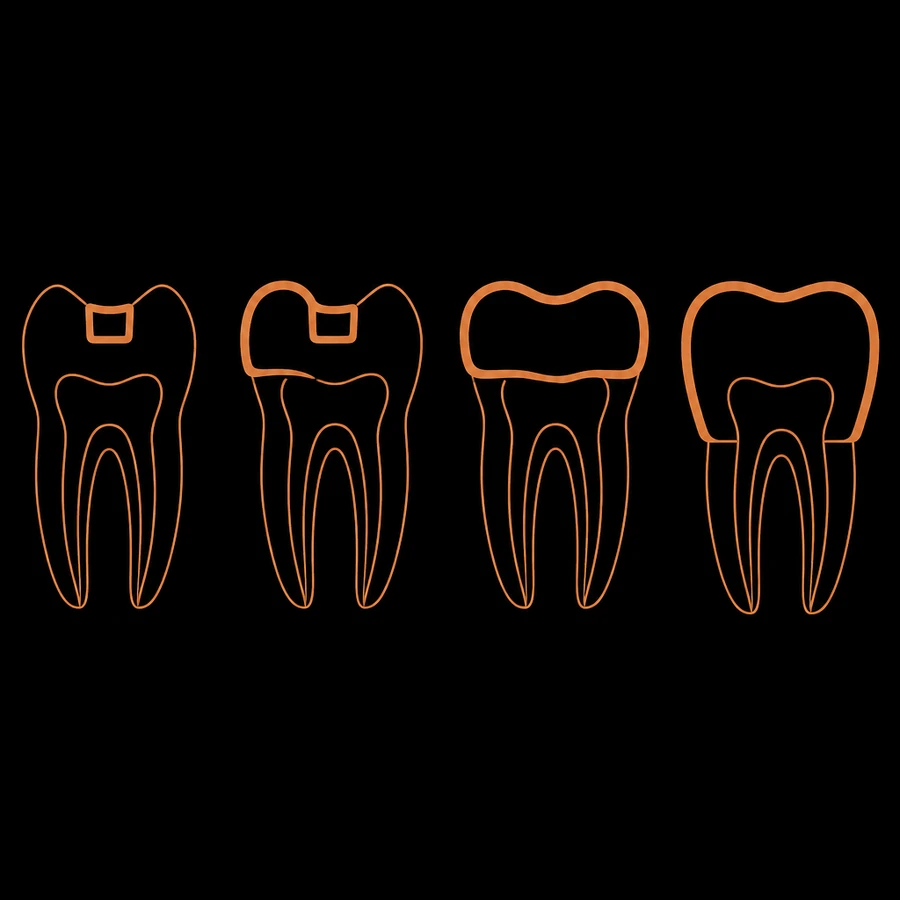
There are several levels between a filling and a crown. Which one may be suitable depends on how much healthy tooth structure remains after the decay or old filling has been removed. The principle is simple: preserve as much tooth as possible and replace only as much as necessary.
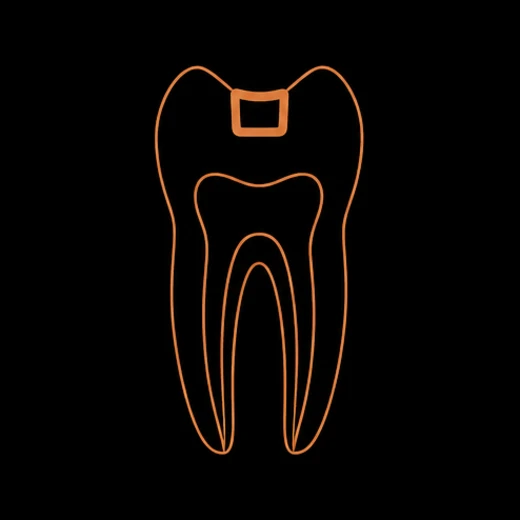
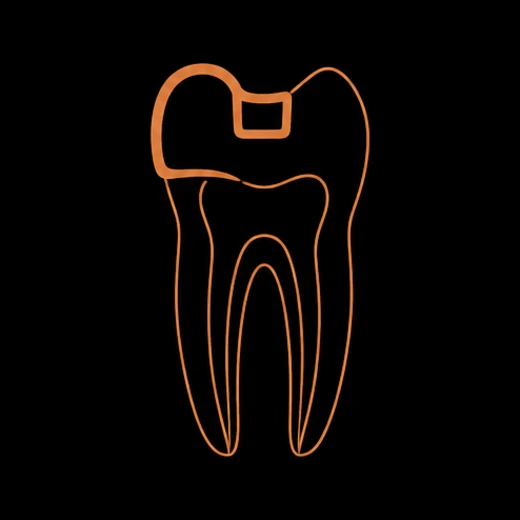
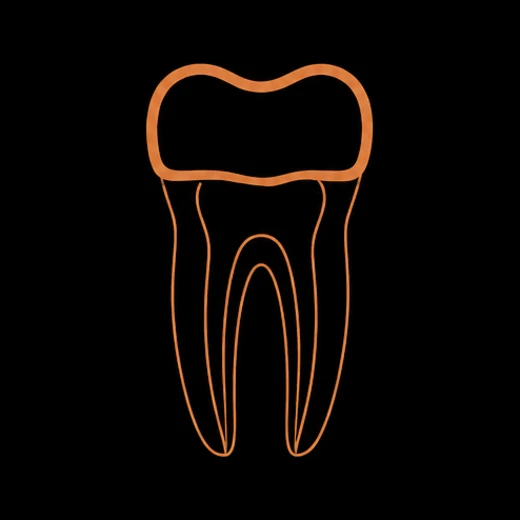
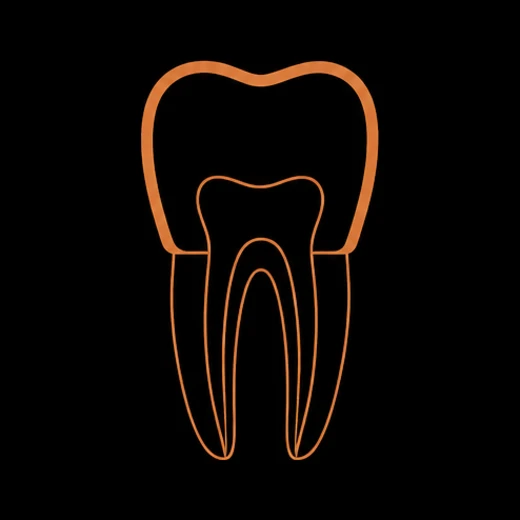
All four forms can be made from ceramic at the practice. Chairside time increases with the extent of the restoration.
Each step to the right costs healthy tooth structure that will not grow back. An inlay leaves the load-bearing cusps intact; a crown does not. The question in the treatment room is therefore never “inlay or crown?”, but rather: Which is the smallest form that still gives the tooth sufficient stability?
This is often decided only after the old filling has been removed and we can see how far the decay actually extends. We tell you then – not for the first time on the invoice.
Guidance
Whether a restoration can be completed in one appointment depends on three things: which tooth is affected, its condition and what matters to you. These three questions show what we will discuss in the initial consultation.
Which tooth is affected?
What condition is the tooth in?
What matters most to you?
A single posterior tooth with a clearly defined defect is the typical case for a ceramic restoration made at the practice. Whether one appointment will actually be enough becomes clear only after the old filling has been removed – we can then see how deep the defect extends and whether the margin can be isolated and kept dry.
We schedule the appointment to allow time for production and tell you before we begin what could prevent completion.
In the visible front region, the way light interacts with the ceramic determines the result. Hand-layered ceramic can reproduce color gradients and translucency more finely than an industrially manufactured block. This requires a second appointment.
For posterior teeth, this difference is usually insignificant; for front teeth, it can be decisive. We show you both routes before you decide – veneers are also part of this consideration.
Persistent pain, a strong reaction to temperature or several affected teeth fundamentally change the plan. Before asking about the material, we must determine the cause. Sometimes root canal treatment is the first step; sometimes a filling is sufficient.
Only once the tooth’s needs are clear does the question of one or two appointments become relevant.
These questions do not replace an examination, diagnosis or consultation. They only indicate which topics we should discuss first. What is possible and appropriate for your tooth depends on the clinical findings and the X-ray.
Process

We examine and test the tooth and assess the X-ray. The result is a recommendation for the type of restoration the tooth needs – and whether a simple filling is sufficient. That answer is not a step backward, but the option that preserves more tooth structure.
Under local anesthesia, we remove decay and old filling material and shape the surface so that the ceramic can later be seated securely and bonded to withstand the relevant loads.
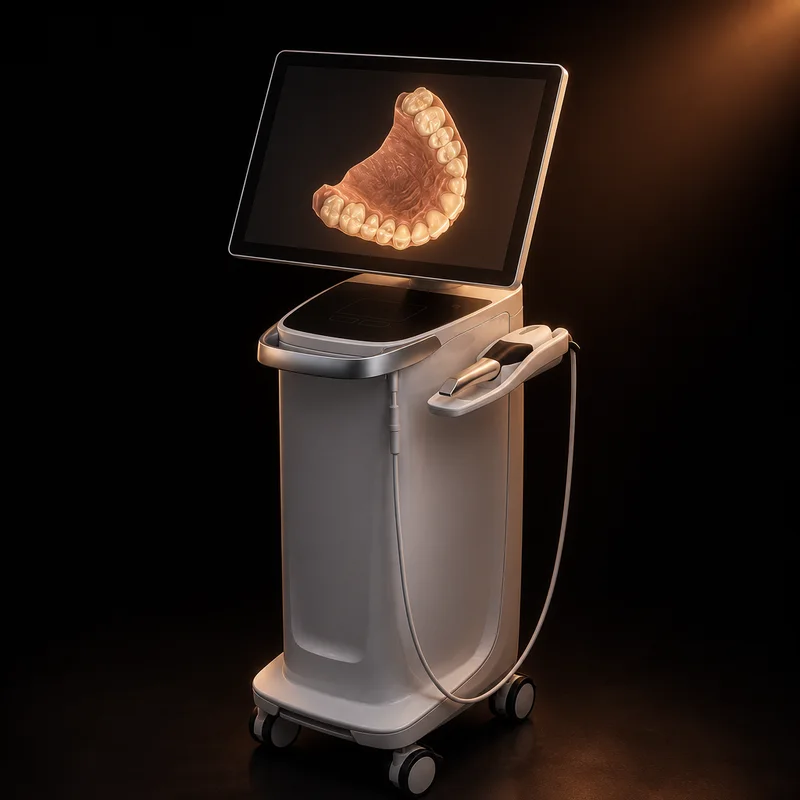
A small camera passes over the prepared tooth, the adjacent teeth and the opposing jaw. Many individual images form a three-dimensional model. No impression material, no full tray, no gag reflex.
The restoration is designed on the model: the chewing surface, contact points with adjacent teeth and contact with the opposing tooth. The software proposal is checked and adjusted – the dentist makes the decision.
Fine diamond burs mill the shape from a ceramic block in a unit located only a few meters away. Depending on the material, a firing cycle in the furnace follows to give the ceramic its final strength and color.
We first place the restoration without adhesive and check its fit, margin and contact points. Color and surface gloss are adjusted until the restoration matches the adjacent teeth.
Ceramic is held in place not by friction, but by the adhesive bond to the tooth. The working field must therefore be completely dry – usually with a rubber dam, a thin sheet that isolates the tooth from saliva and the tongue.
Finally, we check the bite at rest and in motion and polish the margins. At a later checkup, we assess the margin, gums and bite again.
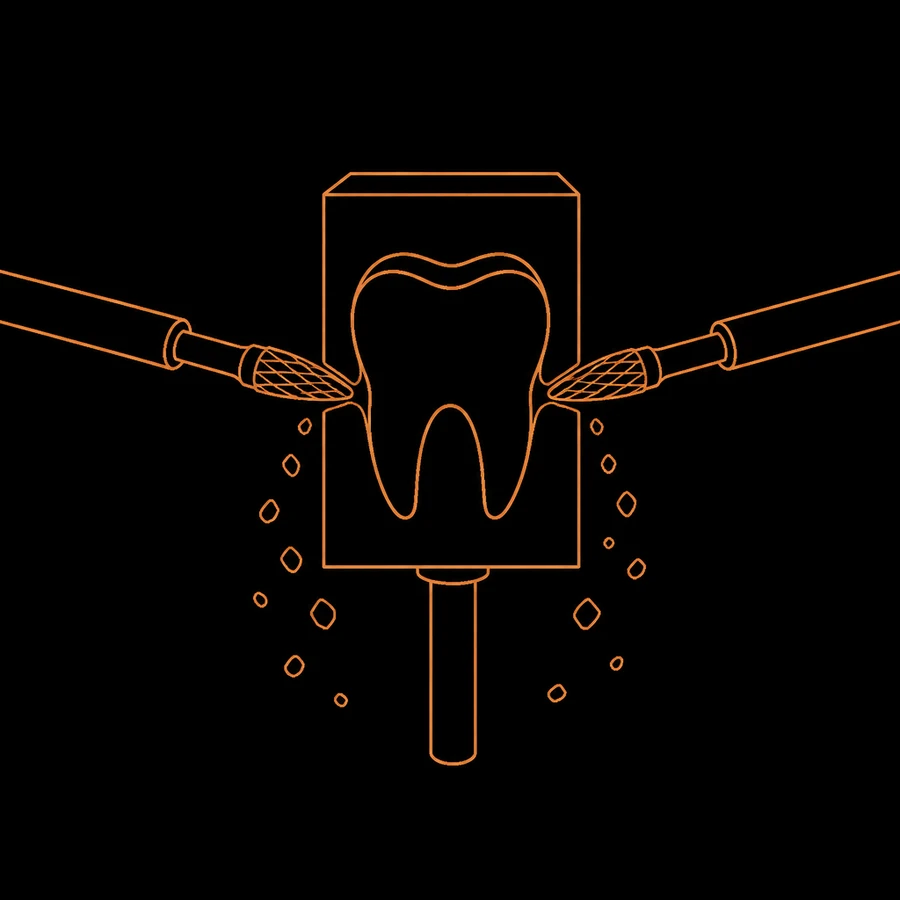
The milling unit uses two diamond tools to shape the block from both sides. What remains is the designed form – made from a single piece of ceramic, with no seam or boundary between layers.
Compared with hand layering, a restoration made from a homogeneous, industrially pressed block has one advantage: it contains no pores trapped between individual layers.
Limitations
“Dental restorations in one appointment” is a marketing promise when stated without conditions. There are situations in which two appointments or the laboratory route are the better choice – and situations in which something else must be treated first. We explain these cases before treatment begins, not midway through it.
No method is right for every tooth. If the laboratory route provides the better restoration in your case, we recommend the laboratory route.
Costs
There is no flat rate for “a ceramic restoration”: the Gebührenordnung für Zahnärzte (German dental fee schedule) requires fees to be determined according to the effort and difficulty of each individual case. The cost of your restoration can therefore be established only after the examination – but you will receive it in writing and in full before we begin.
For a crown, the gesetzliche Krankenversicherung (German statutory health insurance) pays a Festzuschuss (fixed subsidy) based on the clinical findings. It is based on the findings, not the chosen restoration – so the subsidy remains the same if you choose ceramic. A fully maintained Bonusheft (German record booklet documenting regular preventive checkups) increases it.
The situation is different for inlays, onlays and partial crowns: the Regelversorgung (standard care defined by German statutory health insurance) is a filling. If you choose a ceramic restoration instead, this is documented in a Mehrkostenvereinbarung (German agreement for additional costs) – statutory insurance contributes the amount it would pay for the filling, and you pay the remainder.
Private insurance and supplemental plans provide benefits according to the policy. Submit our Heil- und Kostenplan (the written treatment and cost plan required before treatment) for review before treatment begins.
A common misconception is that production at the practice is automatically less expensive. The laboratory invoice is eliminated, but the practice provides the equipment, software and material – and chairside work increases. The advantage lies in the timeline, not necessarily in the cost.
Longevity
In a meta-analysis of 14 studies, the five-year survival rate for ceramic inlays, onlays and partial crowns was between 92 and 95 percent – and 91 percent after ten years.
Systematic review and meta-analysis, Journal of Dental Research 2016 – PMID 27287305 (5,811 restorations in the five-year analysis, 2,154 after ten years). The analysis includes laboratory-fabricated restorations and is not evidence specifically for chairside fabrication. An average from studies is also not a promise for your tooth: remaining tooth structure, bite, grinding and the quality of the adhesive bond affect the outcome.
Chipping at margins and cusps, cracks in the material, failure of the adhesive bond, new decay at the restoration margin and temporary sensitivity to temperature during the first few weeks.
The margins are the vulnerable area: new decay develops there if plaque remains. Cleaning between the teeth and regular professional dental cleanings directly affect longevity – as does a splint for nighttime grinding.
Questions
For a single posterior tooth with clear clinical findings, usually yes. Allow for a longer appointment – preparation, scanning, designing, milling, firing and placement all take time. If root canal treatment or gum treatment is also necessary, we deliberately split the procedure.
It is manufactured differently. The block is industrially pressed and therefore very uniform, with no pores between layers. Hand layering in a laboratory is better able to reproduce subtle gradations in color and translucency – an advantage that matters in the visible front region but usually not in the posterior region.
No. The camera does not make painful contact with the tooth and works with light rather than pressure. Many people find it the most comfortable part of the appointment because no impression material is needed – especially if they have a pronounced gag reflex.
If the restoration is completed in the same appointment: no, you will not need one. If the procedure nevertheless has to be split, we provide the tooth with a temporary restoration until the ceramic is placed.
Studies of chairside ceramic restorations show high survival rates over many years. However, an average from studies is not a promise for your tooth: how long your restoration lasts depends on the remaining tooth structure, bite, grinding, oral hygiene and the quality of the adhesive bond.
Unlike a conventional cemented restoration, the adhesive bond can bear loads immediately. You should nevertheless avoid eating while the anesthetic is still active – there is then a high risk of biting your cheek or tongue.
Dental ceramic is metal-free and considered well tolerated; it also conducts temperature less readily than metal. If you have known allergies or intolerances, tell us before the material is selected.
For a crown, there is a Festzuschuss (fixed subsidy based on the clinical findings) under German statutory health insurance, regardless of whether the crown is made in a laboratory or at the practice. For inlays and partial crowns, the Regelversorgung (standard care defined by German statutory health insurance) is a filling – ceramic is then covered by a Mehrkostenvereinbarung (German agreement for additional costs). The relevant document is the Heil- und Kostenplan (the written treatment and cost plan required before treatment), which you receive before treatment begins.
Depending on the damage, polishing, repair or replacement may be possible – the latter can often be made again by the same method in one appointment. Contact us promptly: a sharp edge can injure the tongue and provide a surface for plaque to accumulate.
Arrange a consultation at Friedrichstraße 80. We examine the tooth, tell you which restoration it needs – and whether it can be completed in one appointment.
Or call: 030 436665501